What an entertainer. What a performer. What a talent. What a crooner. What a comedian. What a clever cookie. What soul. What heart. What charm.
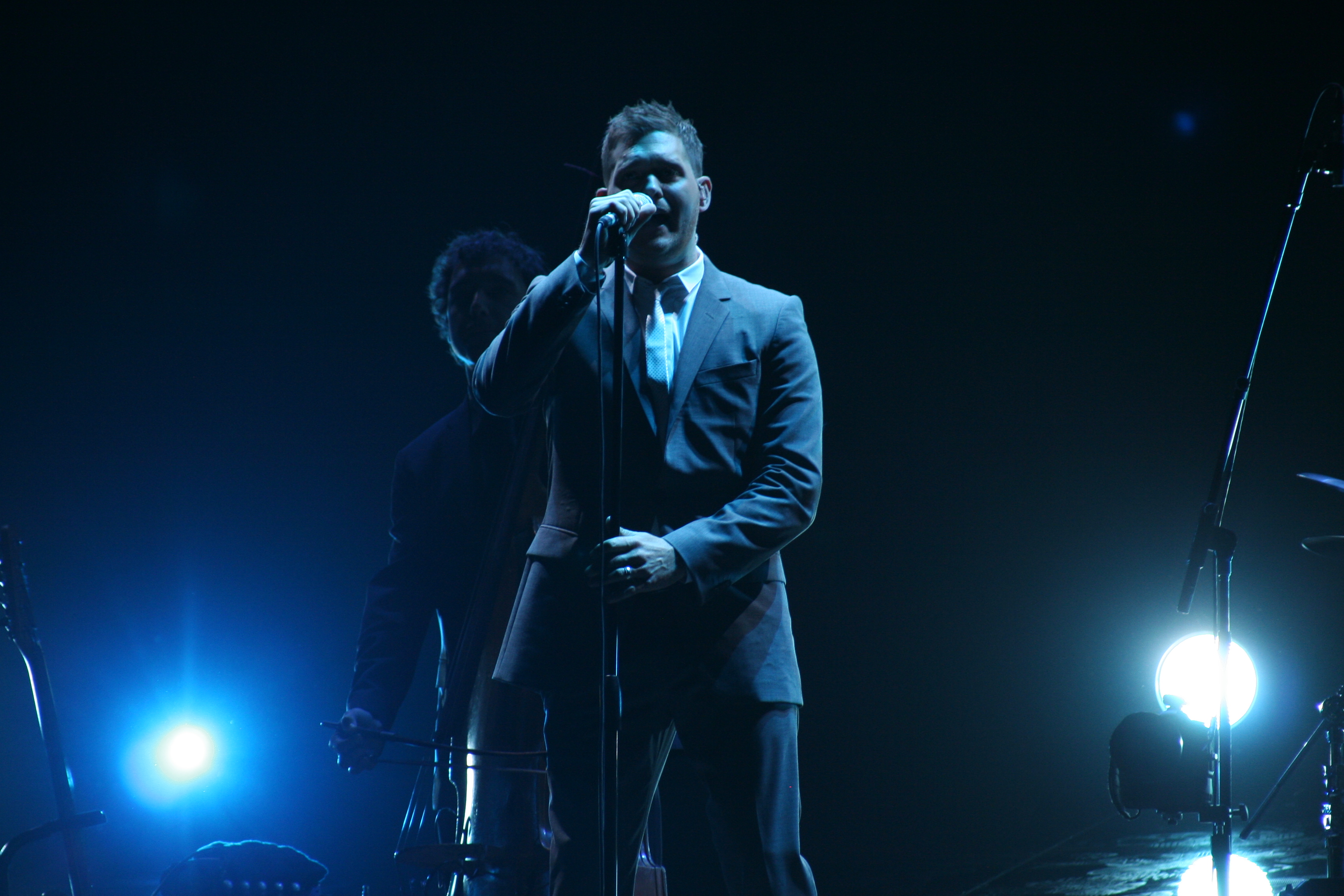
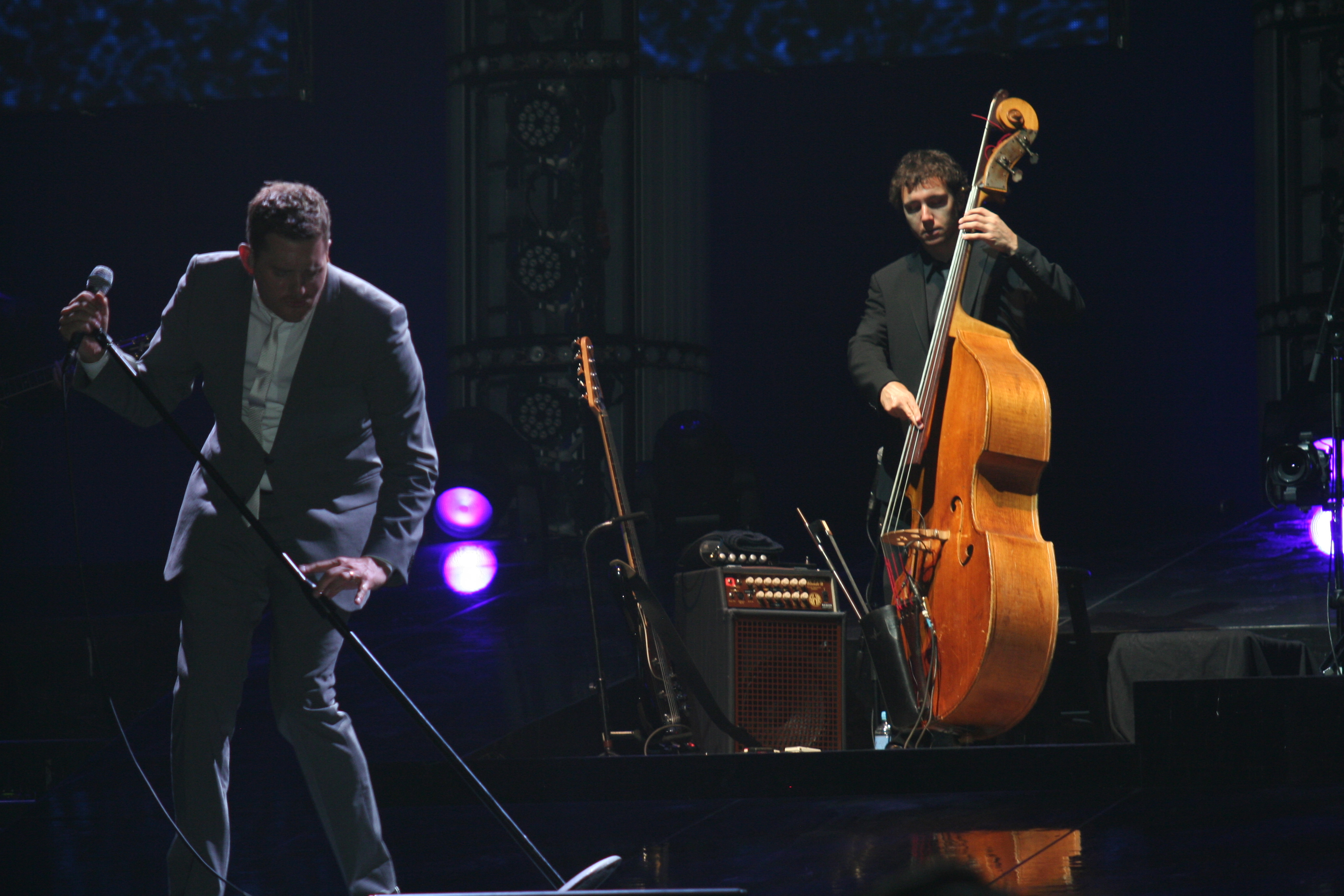




Taken at Rod Laver Arena, in one of the best cities in the world.
What an entertainer. What a performer. What a talent. What a crooner. What a comedian. What a clever cookie. What soul. What heart. What charm.
Taken at Rod Laver Arena, in one of the best cities in the world.
Read the first A Few Things I’ve Learned…
Last week I read: The Thoughtful Dresser by Linda Grant
As soon as I saw Linda Grant’s book on the shelf at Melbourne’s Reader’s Feast, I knew it was going to be a book that resonated with the very core of me.
The Thoughtful Dresser is about clothes, fashion, how and why we dress the way we do and why clothes matter. It’s an academic and intellectual look at why what we wear defines our identity, and how the way we look and the things we wear tell a story.
Complete with some of her mothers famous words, “The only thing worse than being skint is looking as if you’re skint,” “A good handbag makes the outfit,” and, “Only the rich can afford cheap shoes,” it’s a treasure trove of anecdotes, excerpts and facts as to why fashion is not just for and about vain, brain-less women.
Grant writes extensively on the changing face of dress over the years, the impact of clothing during World War II, and there’s even an entire chapter devoted to fashion and clothing post 9/11. Such examples only drive home the message that there’s more to clothing than purpose. Almost every moment in history that Grant refers to has been defined by costume and dress – and she offers some persuasive explanations as to why.
The Thoughtful Dresser is, indeed, a thoughtful look at the pleasure involved in dressing and adornment, and the joy of shopping and finding the perfect dress or handbag.
It’s a welcome change from the flirty and, dare I say it, girly writings on clothes and fashion – this is a serious book, sometimes entirely exhaustive with information, on the serious matter of dress.
An article from the archives today. I wrote this piece almost two years ago for Trespass Magazine. I can safely report that not a lot has changed.
There is nothing I dislike more than a wanker. Excuse the crass language, straight up and in the first sentence, but I just can’t think of another term to so accurately and honestly describe one. You see, lately, I just can’t seem to escape them. Wankers, that is. Everywhere I turn there is one waiting, ready to attack or approach me with their wanky-ness. And, the sad part is, these people all share one common problem: they think they are better than everyone else.
When you live in a city like Melbourne – one alive and rich with culture, arts, sport, entertainment and a myriad of other wonderful things – it’s inevitable that you will meet a mixture of people. Lovely, down-to-earth, witty, talented, inspiring people. People that are a pleasure to know. Then, there are the wanker people. People who function with a cooler-than-thou attitude.
I’ve reached breaking point.
Maybe I’m getting older, maybe I’m becoming more cynical or maybe I’m just noticing it more, but it seems the more I try to find good people, the less of them there are to be found.
The other day I met with an incredibly intelligent and inspiring entrepreneur. In our discussion, we touched on the idea of ‘cultural and intellectual superiority’. The idea that one person – say, a designer in Melbourne – feels they are actually above many other people that live in Melbourne, even their own kind of ‘designer people’. That their place of residence, career title, choice of reading material or brand of footwear actually places them at a level higher than someone else. The issue is one that is alive and well all over the world. My problem is that it has seeped into my world, and I don’t like it.
The idea that shopping at a certain store, or listening to a certain kind of music, results in you being cooler than another person is a terribly arrogant one. You’re no better, smarter or more cultured than another person for reading a certain book, or drinking coffee from a certain café. The assumption that, to qualify as hip, you need to buy into a certain culture and participate in its activities is incredibly limiting and extremely draining. How boring if we were all to be the same.
At the heart of the entire ‘wanker’ problem is judgement. Cultural and social judgement. The notion that you can’t buy Who Magazine and Dumbo Feather at the same time, because really, how can celebrity gossip and serious writing mix? I’m here to tell you that it can. That OK! Magazine is perfectly appropriate to read, and enjoy, and that you can still be interested in ‘serious’ journalism as well. And, in the same vain, listening to Lady Gaga, or any sort of pop music, does not make you musically defunct. That it’s possible to love Mars Volta and John Mayer and The Presets and Cut Copy all at the same time. When you shut out whole groups of culture – like pop and mainstream – you also shut out a great deal about what you can possibly learn.
The most intelligent and cool people I know are those that spread their interests far and wide. Funnily enough, they are often the people who use the smallest amounts of judgement. They are the people who enjoy Batman Begins as much as Hairspray as much as Inception. They are the people who succeed, in whatever field they are in, the quickest. And they happen to do it with a great deal of style.
I’ve always laughed, quite openly, at people who think they are incredibly cool or creative or in the know. Here’s what: I’m cool, creative and very in the know but I don’t wear it like a banner. Usually the honest types don’t. It’s the try-hards that parade about, looking silly. The people who think they are cool.
I work in an industry that is seen as political, ruthless, and filled with superficiality and judgement. I’m yet to discover any of that. On the contrary, I find independent media, and the circles we associate with, to be like a quaint, small community: everyone knows everyone else and everyone supports each other. Regardless of the publication you work for, you’re always at the same events, you’re always bumping into each other and you become, as unbelievable as it may sound, the best of friends. Each other’s loudest cheerleaders. The real truth is that, title of the magazine aside, we’re all in it together.
I’ve realised it is the world that is actually political, ruthless and filled with superficiality and judgement. And, despite all the advances in technology and social networking, we’re very far from being any sort of quaint, small community. Some days, it seems that every wanker out there is just waiting for you to trip up, to make a small mistake, so they can quickly correct you, and then tramp on you. I’m yet to discover any wanker that has actually done something good for the world, or another person. And until I do, there’ll be nothing I dislike more than one.
Last week I read: A Golden Age of Freedom by Rupert Murdoch.
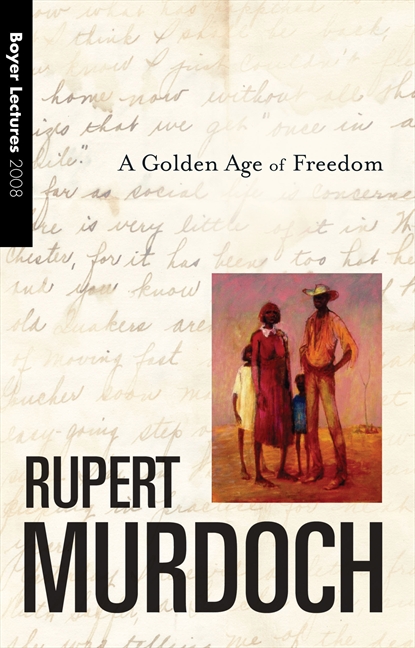
A Golden Age of Freedom was the title of the Boyer Lecture Rupert Murdoch, Chairman and CEO of News Corporation, delivered in 2008, and is now the title of the ABC printed transcript of that lecture. And what a lecture it is – empathetic, honest, inspiring at times, and always focused on the future.
I’m impressed that Murdoch is so embracing of technology, in fact, he argues that we must vigorously embrace such change – and continue to – for the benefit of Australia and all Australians.
He discusses the opportunities available in Australia, the observations he has made about developing nations, and why he believes Australia has become complacent. The lecture is definitely stirring, mostly in all the right ways, and it has given me a greater understanding of the man behind the empire – his values and beliefs – and why, despite the fact he no longer lives in Australia, he is still qualified to comment on its future.


Earlier this year I made a decision to not spend any time with people that I don’t like.
I cannot tell you how incredibly liberating that decision has been.
There’s a certain freedom attached to being honest – with yourself and with others. And my decision has also resulted in another welcome side effect: the gaining of time.
I value time. Heck, we all complain that there is not enough of it.
It’s not until you stop doing some things that you realise we, perhaps, may not be as time poor as we like to think we are.
We’re just spending our time on the wrong things.
In my case, on the wrong people. People that, honestly, I’m just not that into.
I’ve realised there’s nothing wrong with saying that. There are an abundance of people in my life that I do care about.
And what I have now discerned is that it’s cretinous to not spend time with people I love, and find time for people that I simply don’t.
I have spent a lot of time – on the telephone, across wooden tables at cafes, over email – talking and listening to people that I wouldn’t carry a torch for.
And I’m only interested in having people in my life that I admire, and respect, and like. People that I carry a torch for, and people that carry one for me in return.
I don’t need fillers in my life. I know too many amazing people to settle for anyone second rate. I have no interest in bearing depleted energy levels thanks to someone I don’t take a liking to – because I’ve realised I don’t actually care what they are saying, and feigning interest is a way of lying to myself.
The truth is; I don’t care. About them. Their opinion. Their life. Their family.
And that’s where the freedom enters. I have cleared entire folders in my brain, created literal space, just by clicking delete.
Someone I don’t like rang me the other day. I took their call – and I didn’t bother being delighted about it, because I wasn’t. I didn’t bother asking them how they were, because I didn’t care. I didn’t stretch the conversation out any further than what I could be bothered with, because I couldn’t be bothered. I didn’t say the common tagline we all throw around, “We should catch up soon,” because I don’t want to. As such, the phone call was pleasant, but short.
That same day, I spoke to three other people – that I love. Those conversations were longer, happier, full of bother and interest.
The magnificent thing about the whole process is: there’s nothing hard about it. The only hard part is being honest with yourself and admitting that there are people you know that you don’t care about. People in your life that you’re just not that into.
I have unfriended, hidden and unfollowed all the people I don’t like on social media sites I use. I have deleted contacts from my BlackBerry. I have delisted, directed and dispersed of all the useless crap in my life – including people.
And I’ve never felt better.

This week I read: I Remember Nothing by Nora Ephron.
I love Nora Ephron.
I love her because I occasionally see a little bit of myself in her. I love her because I sometimes want to be like her. And because if I end up like her I won’t be in any way disappointed.
I love her because she is funny. Deeply, honestly, funny. And she’s clever. Seriously intelligent. And she’s lived. Really lived and enjoyed and sucked the marrow out of life.
I love her because she doesn’t pretend to be something she isn’t. And because she’s wise. She’s so wise and blunt, and I love that.
Her latest book, I Remember Nothing, is a collection of short articles and essays on her life and her experiences. It’s in many ways like her previous collection, I Feel Bad About My Neck, but maybe even more personal, perhaps a little more telling. It’s a book of reflections – of memories made, events attended, people met, things felt – and everything forgotten.
The way Ephron writes is poignant, without being soppy. Sarcastic, without being too much so. And funny. I’ll call her that 100 times, because that is what she is.
Nora Ephron is so much more than the screenplays she wrote. There’s more to her than Harry Met Sally, Sleepless in Seattle, You’ve Got Mail, Hanging Up, Julie & Julia, This Is My Life and the rest. And I think it can be found in her collections. In I Remember Nothing – where she may have forgotten the encounters with people she has met, like Eleanor Roosevelt, Cary Grant, Dorothy Parker and The Beatles – she has managed to compile, to list, to remember the things that define her; husbands, and family, New York, and travel, books, and writing, waffles, and reading, dinners, and friends…and all the little pieces in between.
Nora Ephron makes me look forward to getting older. If for nothing else than because there’s still a chance to be like her.
I read this poem this evening. And I thought, ‘how true, how good.’
Song
Victor J Daley
(1858-1905)
What shall a man remember
In days when he is old,
And Life is a dying ember,
And Fame a story told?
Power – that came to leave him?
Wealth – to the wild waves blown?
Fame – that came to deceive him?
Ah, no! Sweet Love alone!
Honour, and Wealth, and Power
May all like dreams depart –
But Love is a fadeless flower
Whose roots are in the heart.

 SANDI SIEGER.